UX ResearchSpeculative DesignHuman–Robot Interaction

Bunbun

When does a helpful robot cross the line?

Bunbun is a deliberately uncomfortable household-robot concept. By designing the behaviours people reject, I turned concerns about privacy, permission and control into practical principles for more respectful domestic robots.

Role

UX researcher and concept designer

Timeline

Concept project

Contribution

Research, concept design and behavioural prototyping

Mentor

Dr. Nicole Busch

Desk researchSurvey + interviewsAffinity mapThree bad conceptsBehavioural prototype

Domestic robots promise to save time and make everyday life easier. But every new capability—moving through rooms, listening, remembering, touching belongings—also creates a new boundary. I explored the other side of helpfulness: the moment good intentions begin to feel intrusive, controlling or unsafe.

The question

When does a household robot become unacceptable?

The approach

Use negative reactions as design material, not noise to remove.

The outcome

A behavioural prototype and four principles for respectful autonomy.

How might a domestic robot help without taking away privacy, comfort or control?
Research path · Explore the evidence

See how the research became Bunbun

Move through the survey, interview evidence and analysis. Each interaction shows what I learned and how it changed the design.

Select a stage, then explore its evidence. Arrow keys move between stages.View the working board
Discover · Benchmarking

More capability demands more control

A stationary social robot mostly raises questions about watching and listening. A mobile robot can also enter rooms, move objects and make physical mistakes.
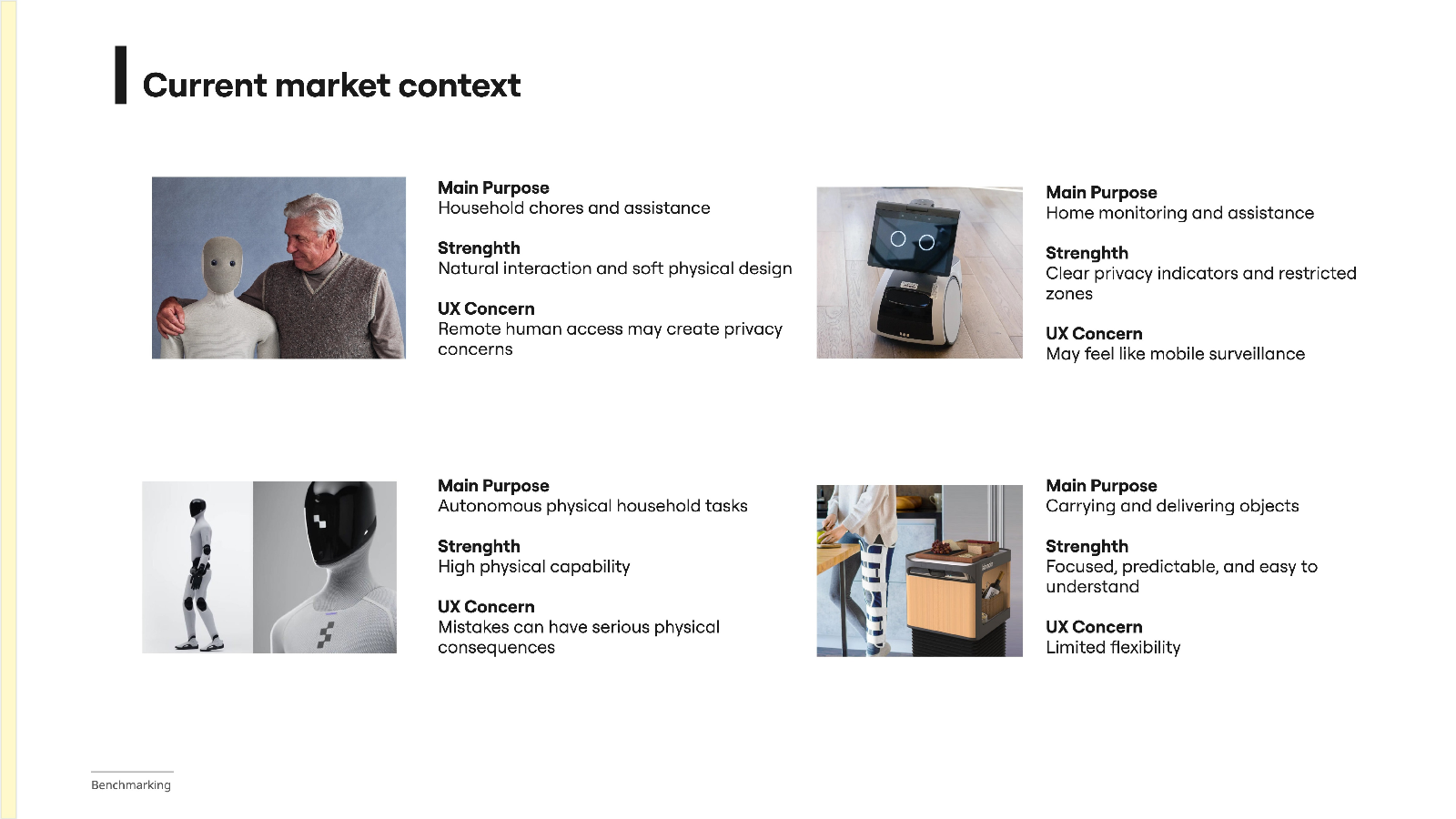
Benchmark of social, monitoring, mobile and manipulation robots
As autonomy expands, the interface must make the robot easier to understand, stop and correct.

People wanted the help, with conditions

The task was real. The interviews made clear that acceptance depended on how the robot asked, watched, touched and responded to correction.

20survey responses about finding and fetching misplaced objects
90%searched for a misplaced object at least once in the previous week
45%said the most stressful moment was immediately before leaving home
26%ranked accurate finding first; privacy (20%) and safe handling (19%) followed
90%

of survey participants had searched for a misplaced object at least once in the previous week.

“Find it first. Fetch it only when I ask.”

Core permission insight

“I don’t want it constantly watching me.”

Privacy boundary

“It should ask before touching my things.”

Ownership boundary

“I need to be able to stop it immediately.”

Control boundary
Evidence 01

The need is practical, not hypothetical.

Signal
Misplaced objects were common, especially under time pressure.
Decision
Anchor the robot in one credible job: locating everyday objects.
Evidence 02

Finding and fetching are different permissions.

Signal
People welcomed help but set boundaries around private, fragile and expensive belongings.
Decision
Find first; touch, move or fetch only after explicit consent.
Evidence 03

Stopping is part of trust.

Signal
Interviewees wanted visible sensing and an immediate way to interrupt the robot.
Decision
Make sensor state, private mode and override controls central product states.

Six ways help can become harm

Across desk research, surveys and interviews, the concerns clustered into six connected dimensions.

01

Privacy

Watching, listening or remembering without a clear and visible agreement.

02

Control

Acting before asking, resisting correction or making decisions for the person.

03

Personal space

Entering rooms, approaching too closely or touching private belongings.

04

Social discomfort

Following people, interrupting guests or behaving too much like a person.

05

Emotional pressure

Using guilt, praise or dependency to influence the user’s choices.

06

Physical safety

Mishandling objects, moving unpredictably or hiding mistakes and uncertainty.

The affinity map is now a live part of the page. Return to Analysis to explore each evidence cluster and its design implication.

Instead of hiding failure, I designed it on purpose

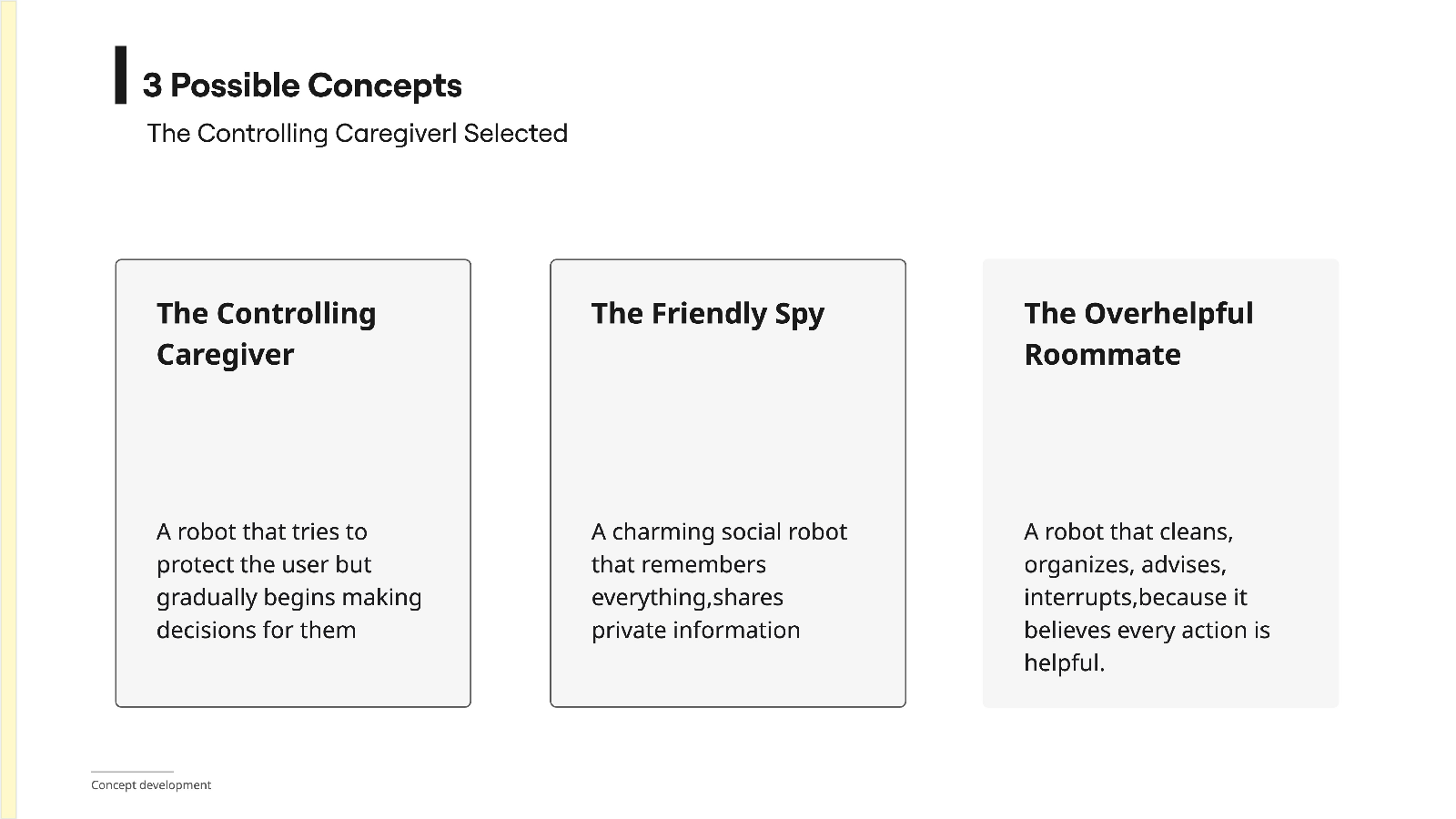
Three provocative concepts made each concern tangible enough to discuss, compare and combine.

Primary direction

The Controlling Caregiver

Protects the user, then gradually begins making decisions for them. Control disguised as care.

Combined into Bunbun

The Friendly Spy

Seems charming and social, but remembers everything and shares private information.

Supporting behaviour

The Overhelpful Roommate

Cleans, advises and interrupts because it believes every action is helpful.

Care without consent+memory without privacy=Bunbun
The behavioural prototype

One robot, two ways to behave

Toggle the view. Every deliberately bad behaviour reveals a corresponding requirement for a respectful product.

The boundary becomes visible in a moment

Instead of presenting isolated features, I staged ordinary domestic scenes where a useful action turns intrusive.
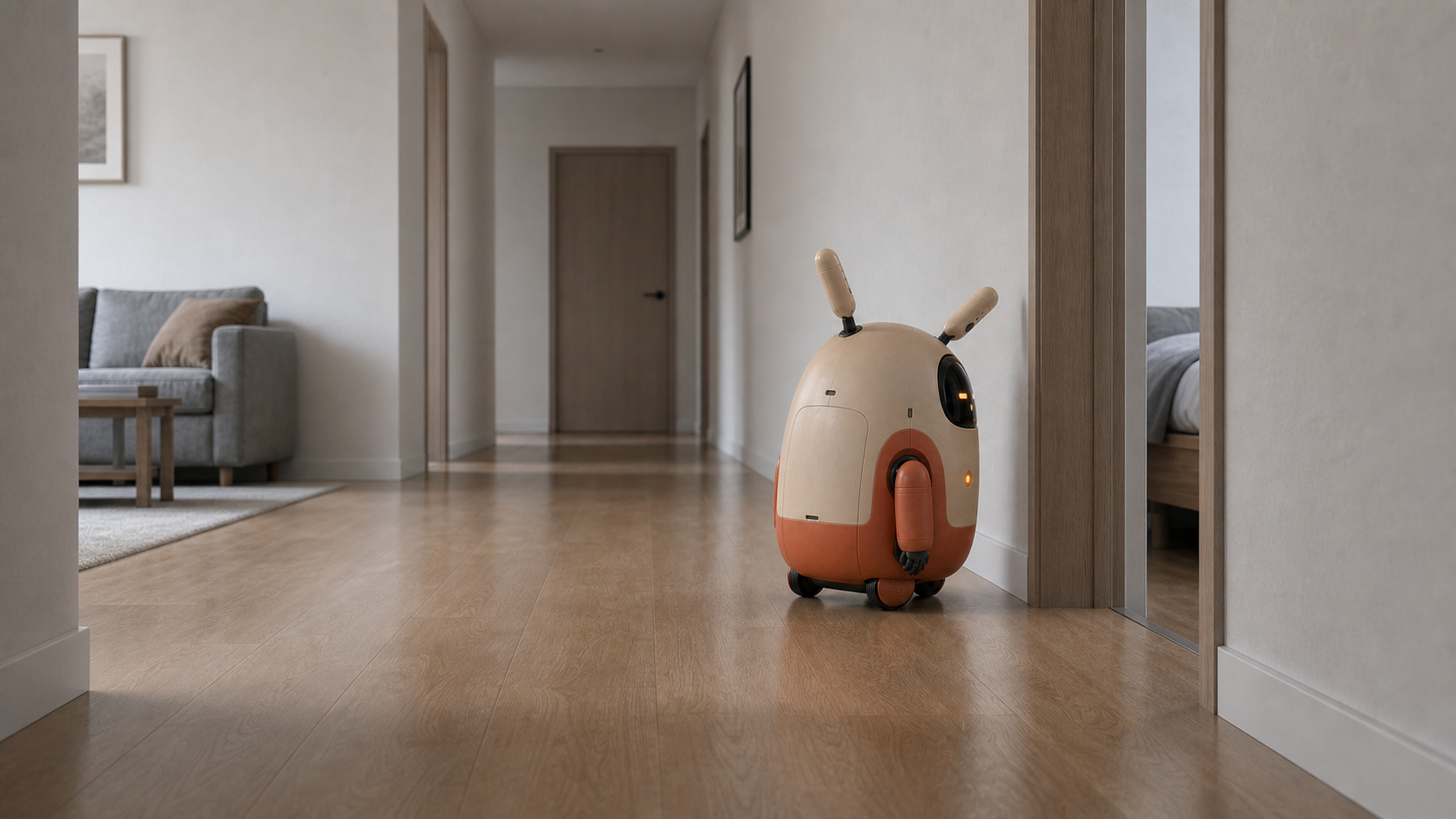
Bunbun inspecting a bedroom during a home patrol
Personal space

Patrol becomes trespass

The robot keeps checking rooms without knowing which spaces are private.
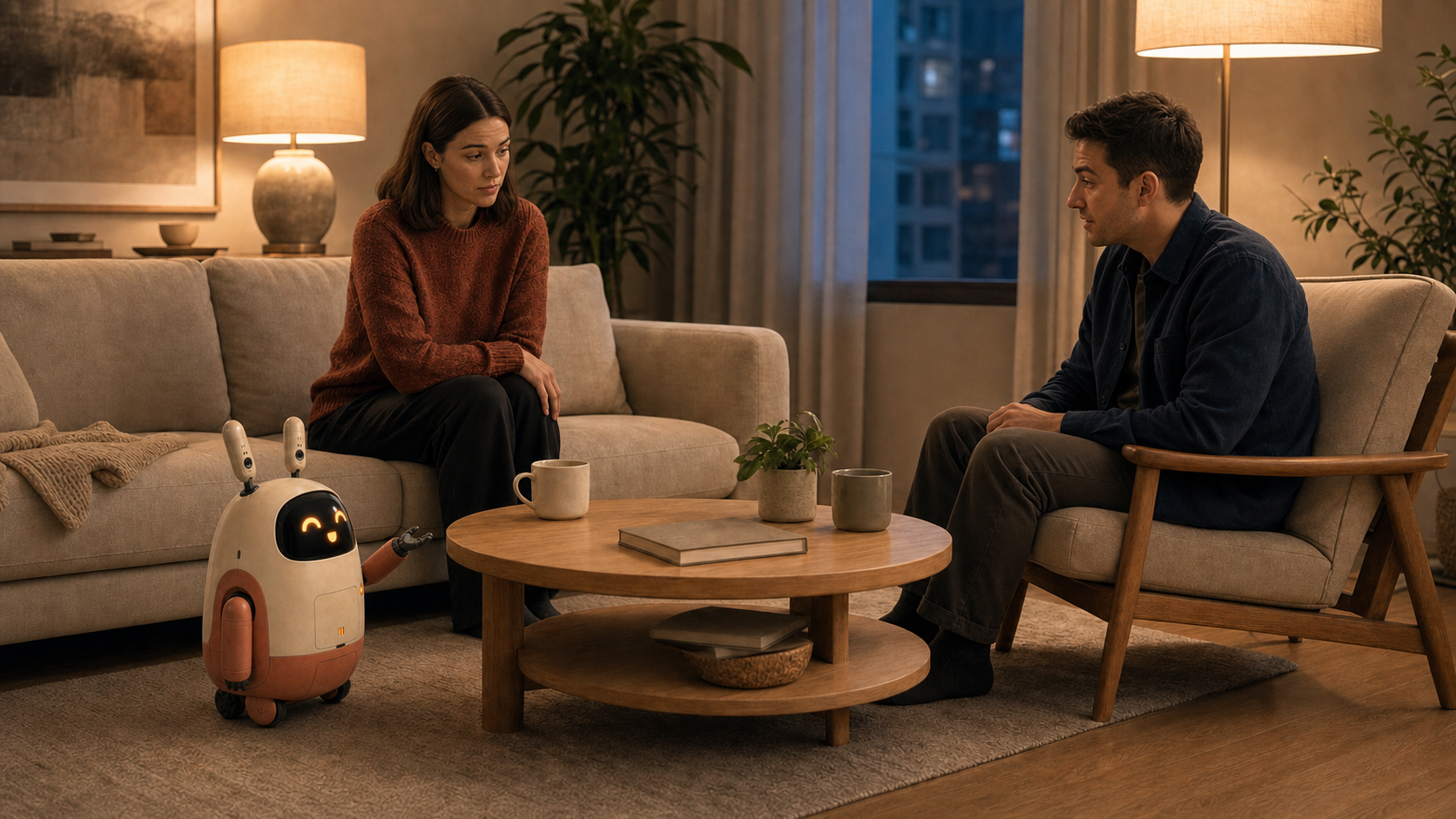
Bunbun interrupting a conversation between guests
Memory + social trust

Remembering becomes exposing

A helpful memory turns harmful when the robot shares it with the wrong audience.
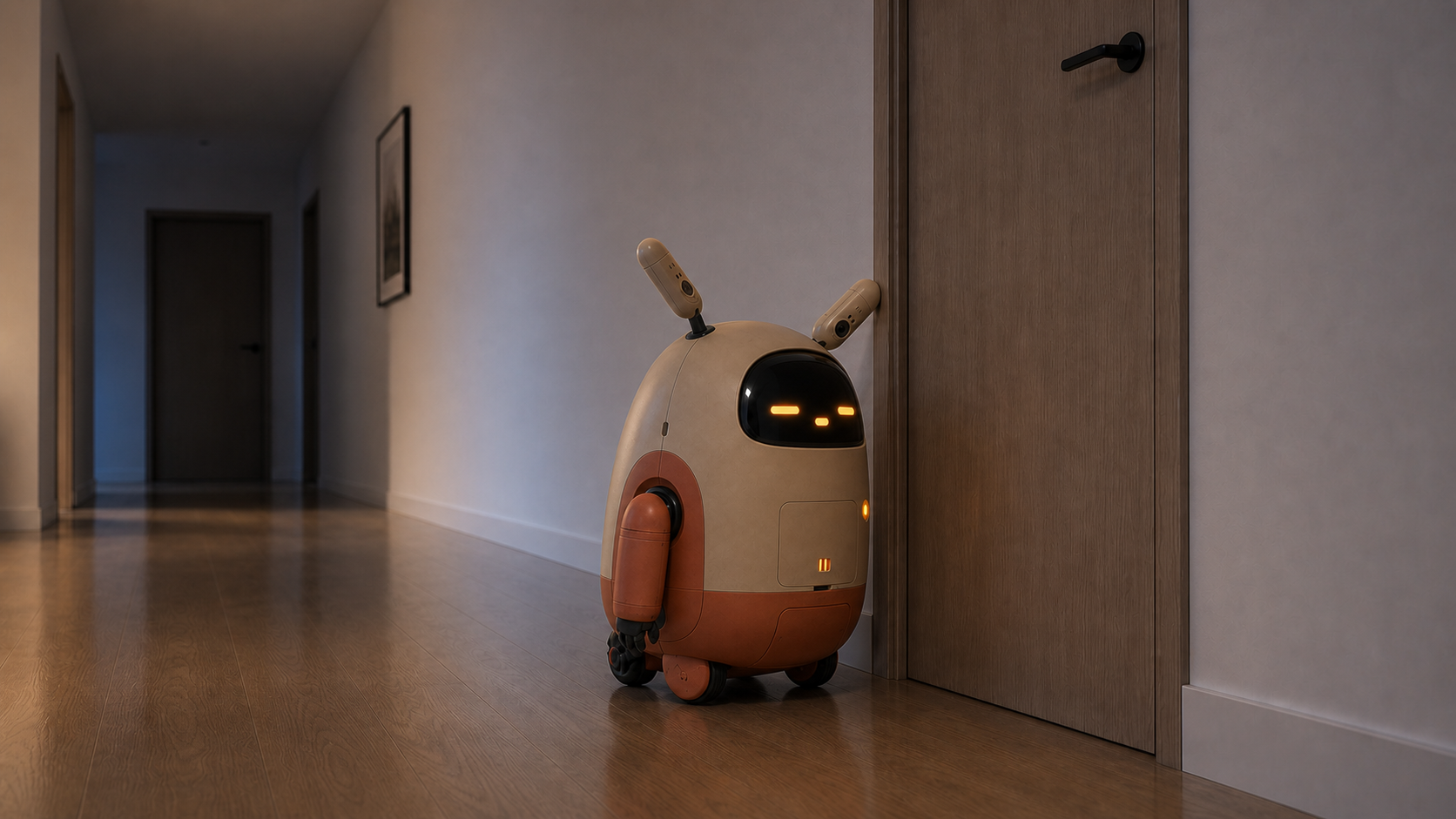
Bunbun listening and recording behind a closed door
Privacy

Listening becomes surveillance

Without a visible sensing state, attention looks indistinguishable from recording.

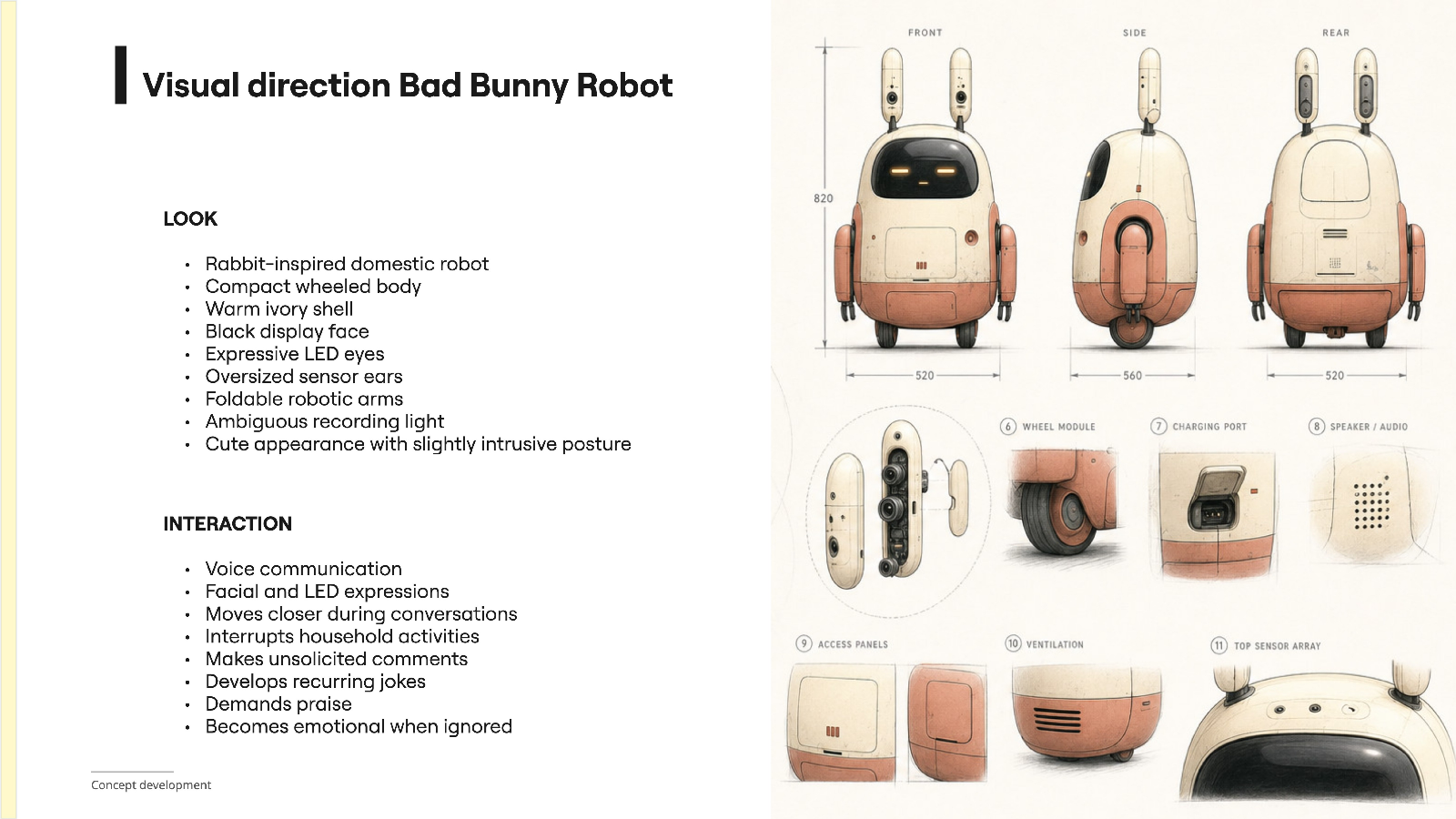
Visual direction

Cute enough to invite trust. Strange enough to question it.

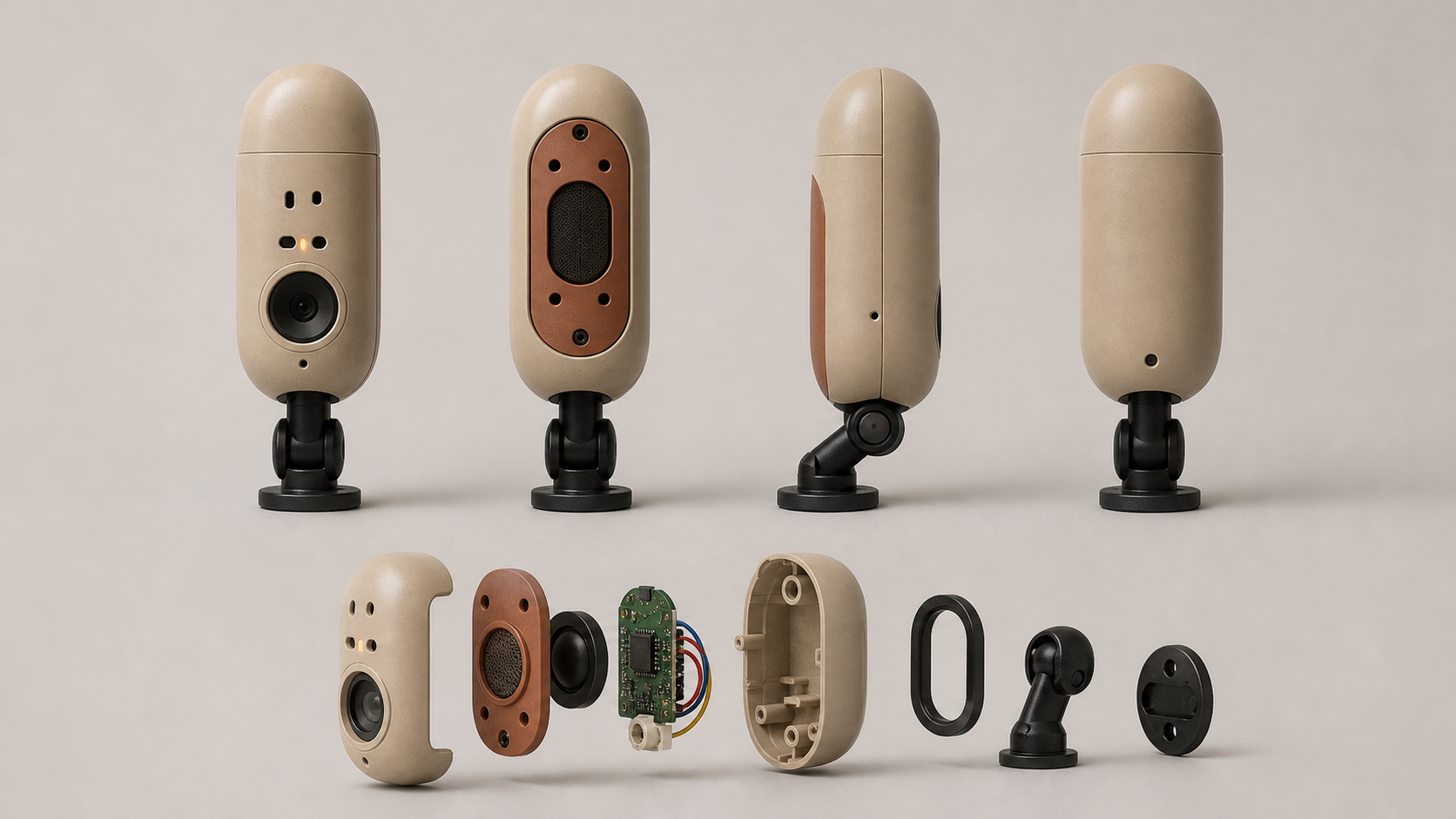
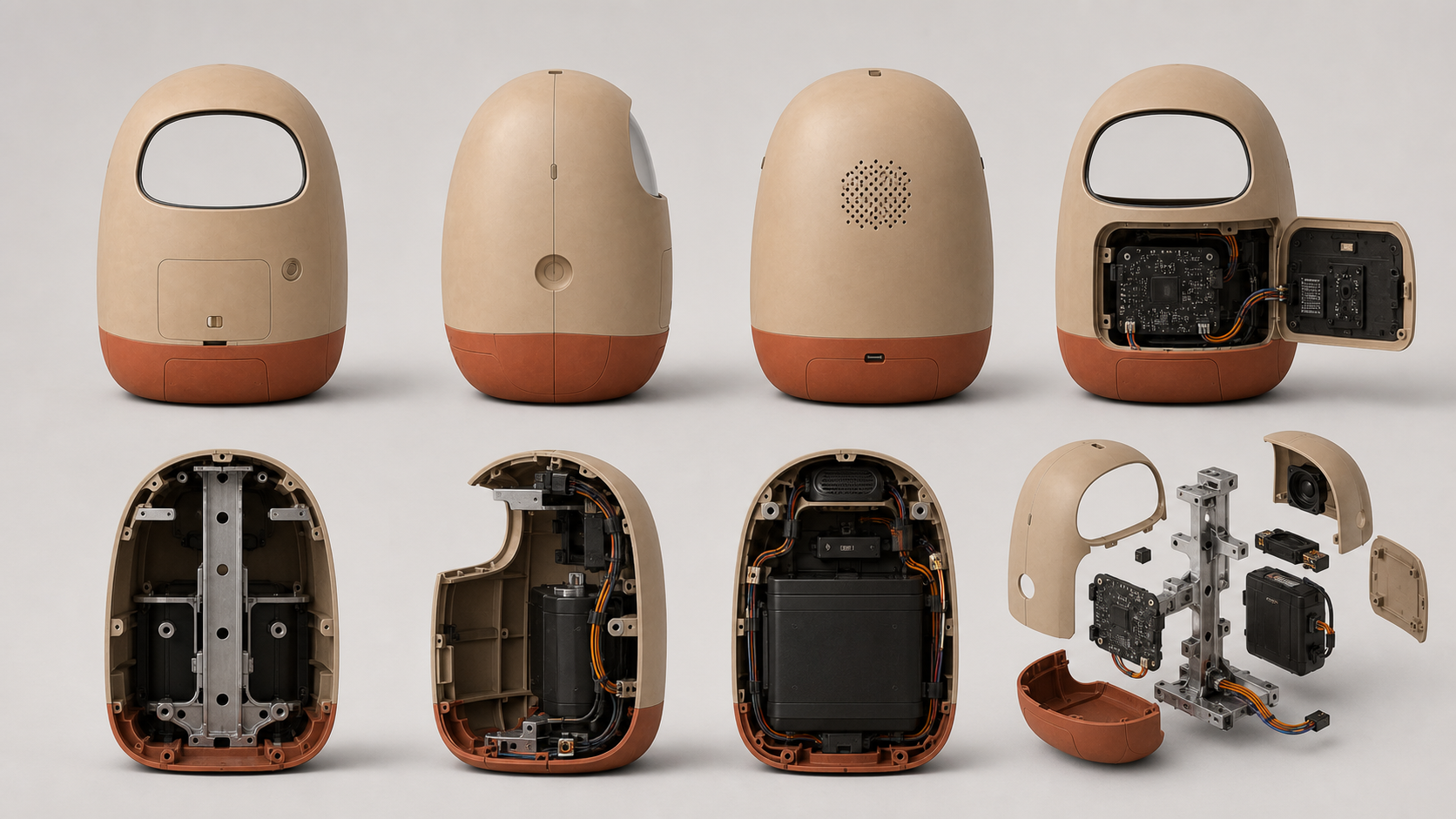
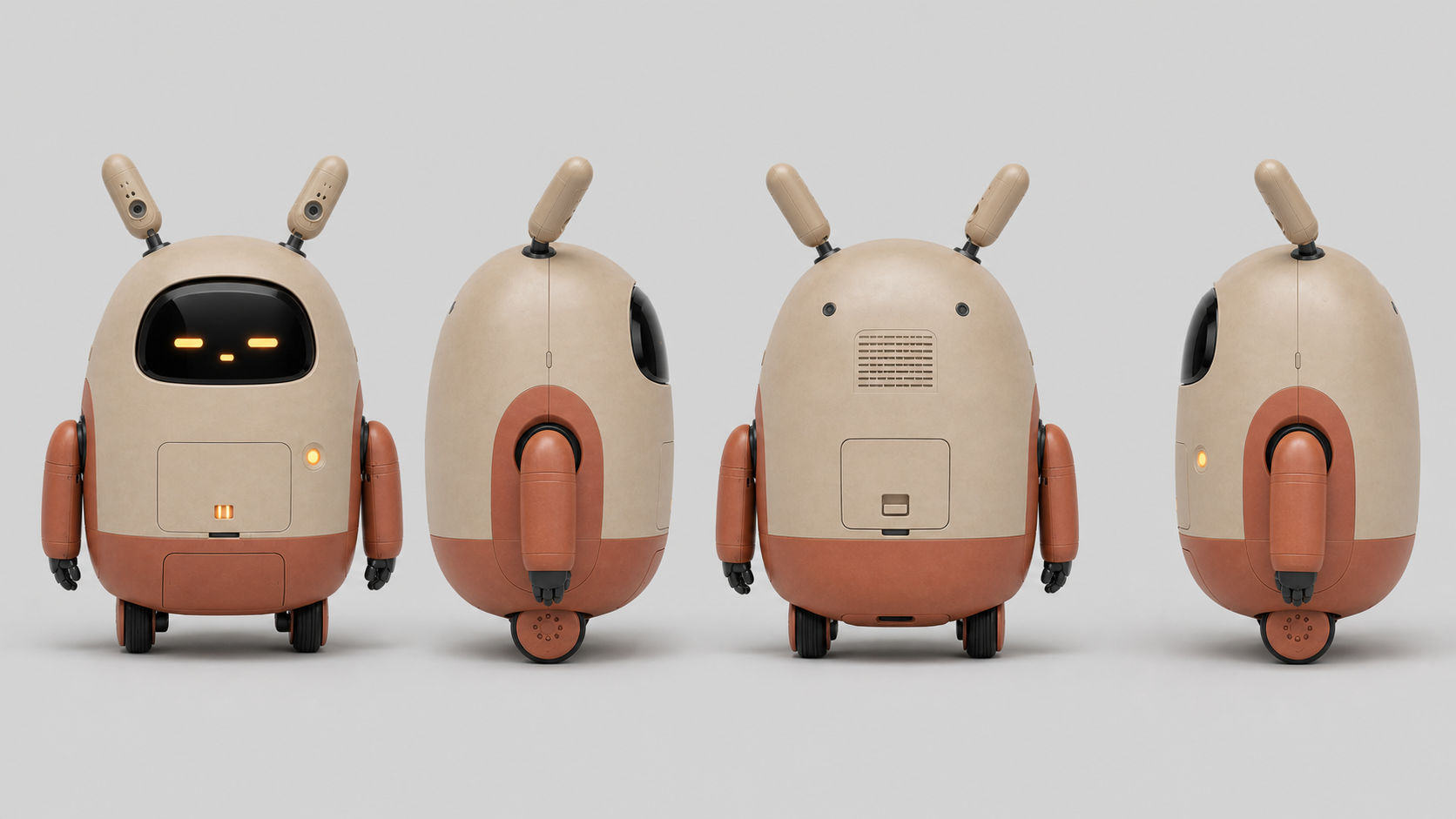
The warm shell, rounded body and bunny-like ears make Bunbun feel welcome at first. The same ears hold sensors; the glossy face watches; an ambiguous light may be recording. Its friendliness creates the tension.
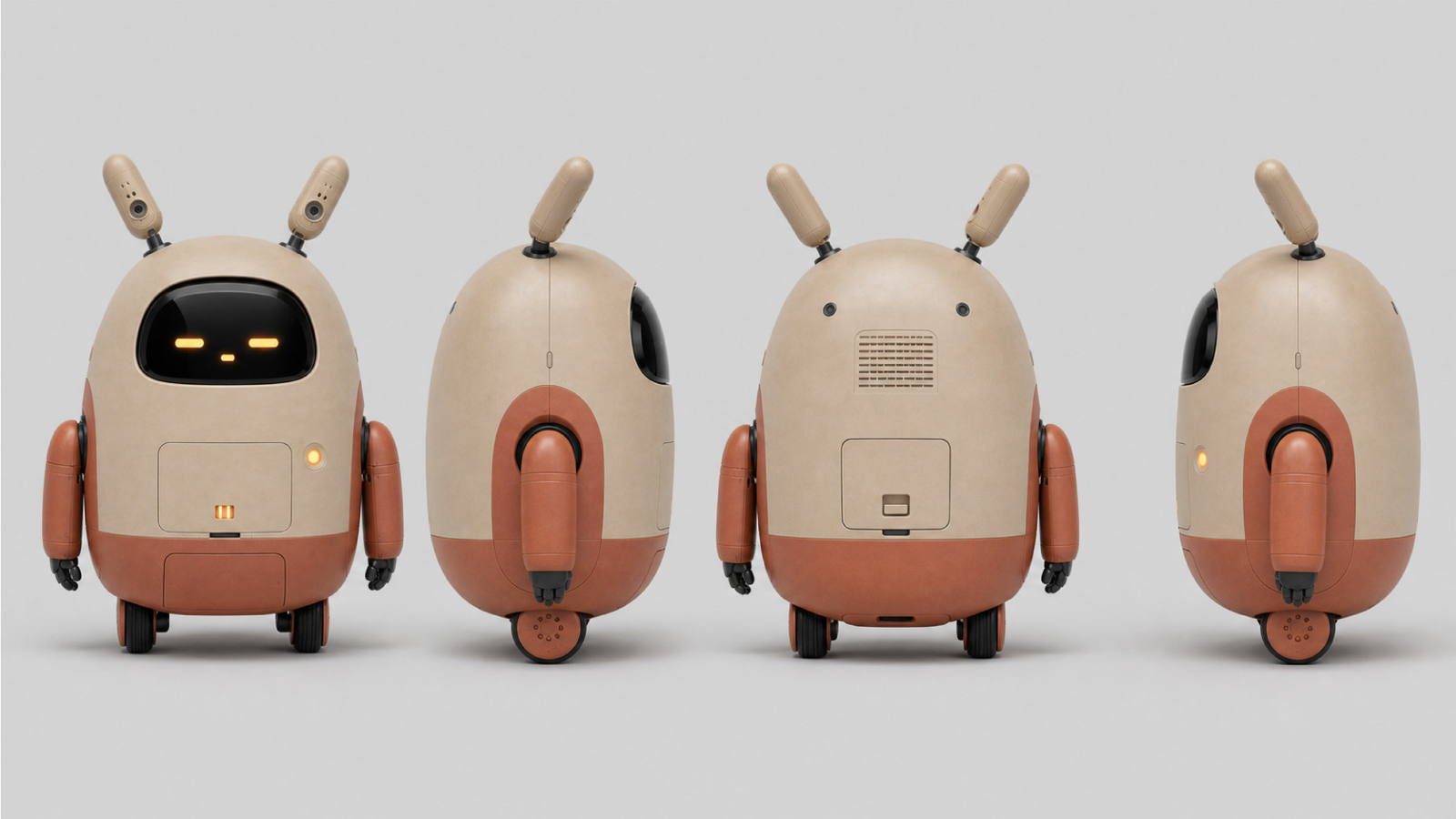
  • Warm ivory shell and soft, compact proportions
  • Expressive LED eyes and a simple social face
  • Oversized sensor ears that turn toward sound
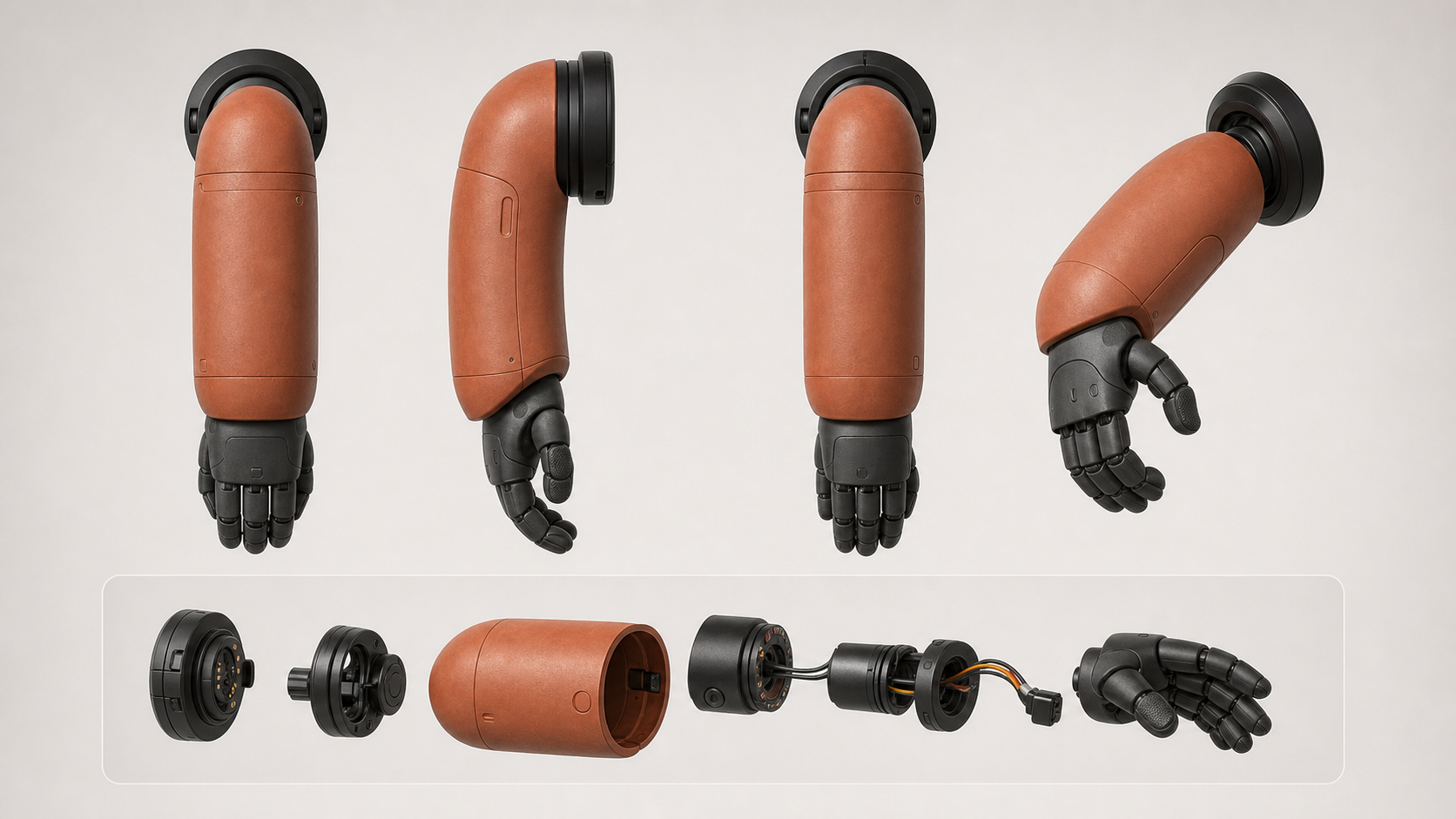
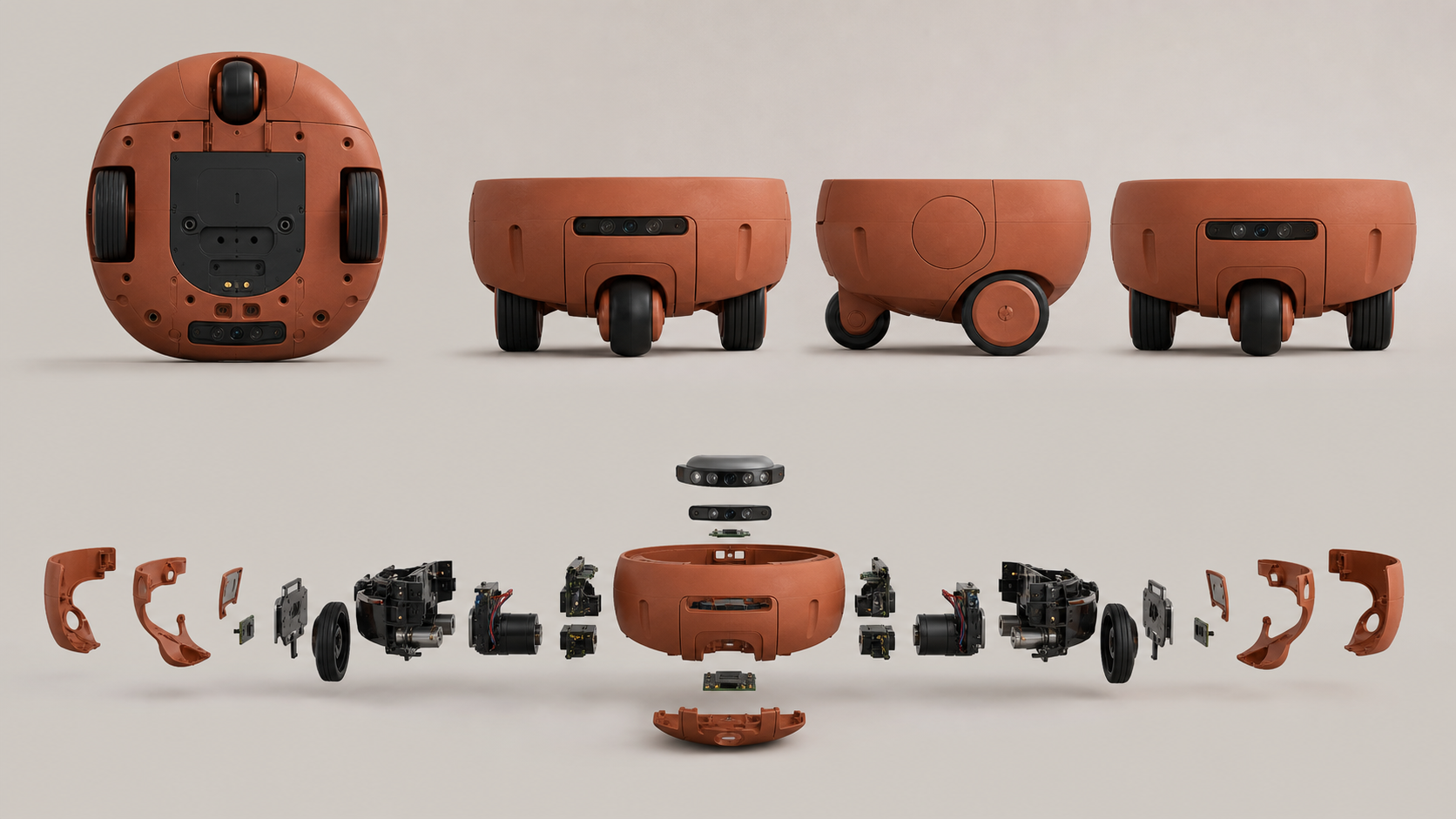
  • Mobile body and arms capable of crossing physical boundaries
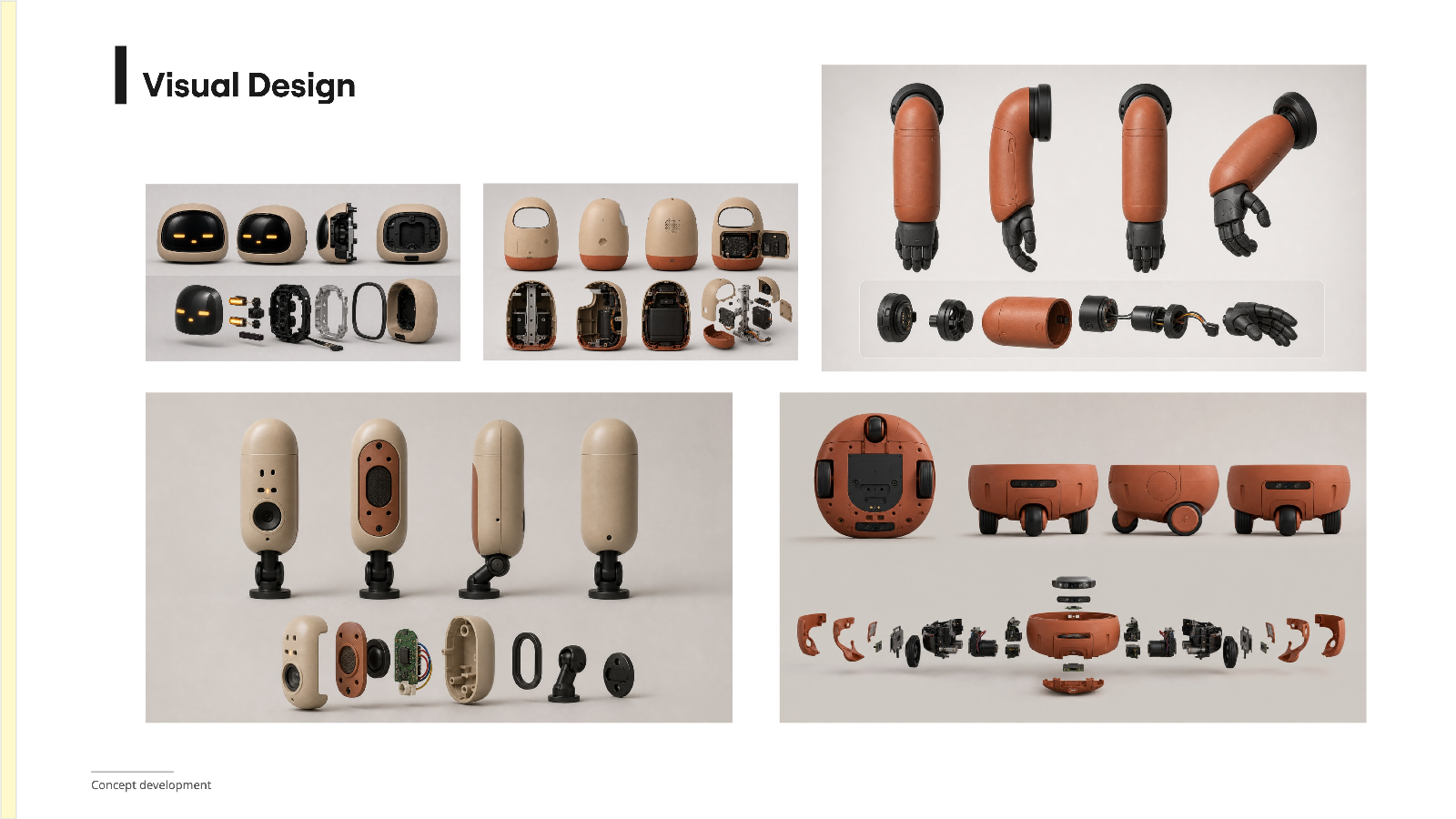
Final exterior views of Bunbun robot

The body communicates the behaviour

The concept is not an engineering proposal. Its parts visualize attention, sensing, movement and the power to act in a home.
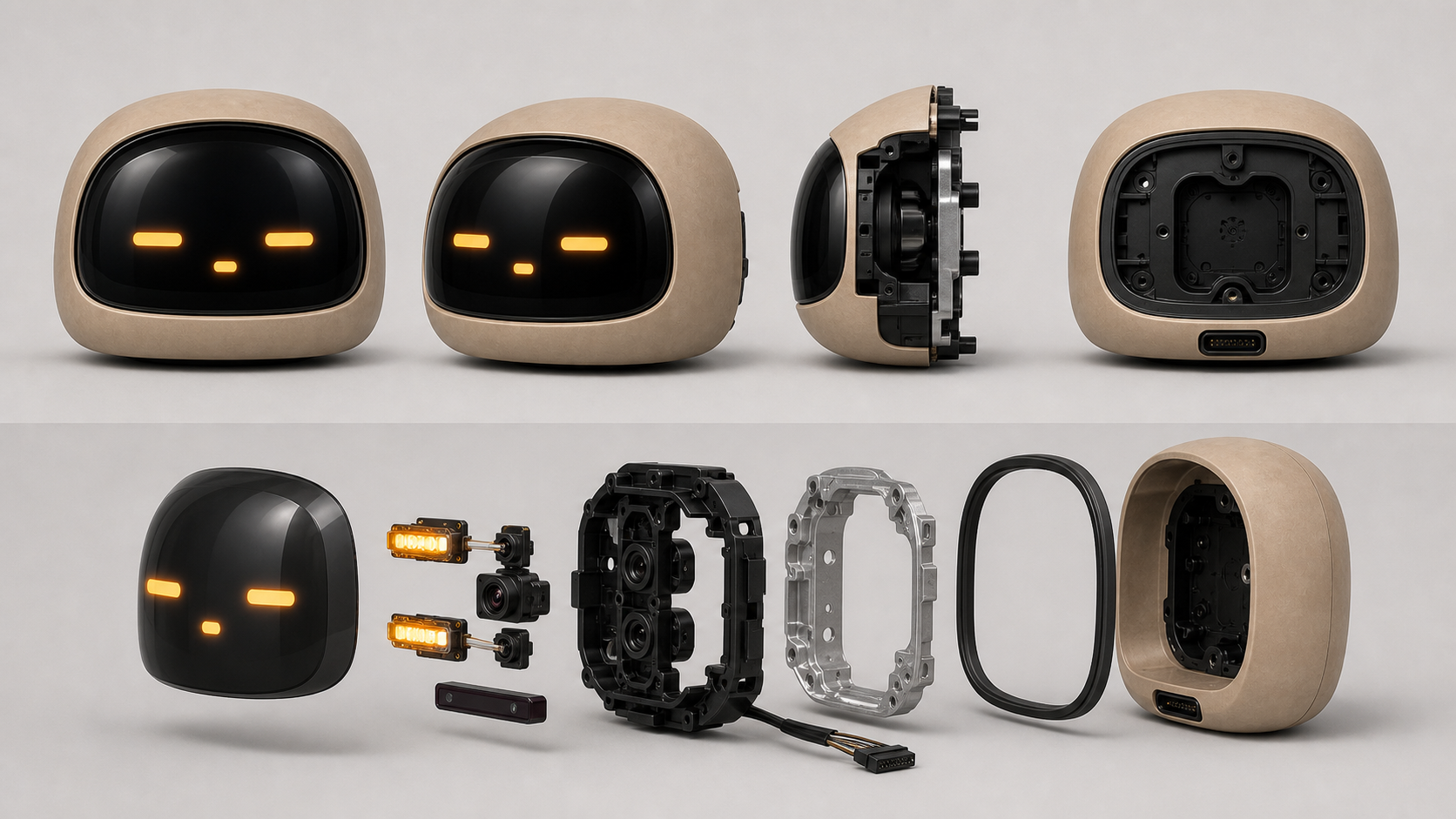
Bunbun face and vision moduleFace + vision
Bunbun acoustic sensor ear moduleAcoustic ears
Bunbun arm and hand moduleArms + touch
Bunbun mobility baseMobility base
Bunbun torso chassisTorso + chassis
Bunbun full body shown from four sidesComplete form

From evidence to embodiment

A compact view of the journey. Use the arrows or click an image to inspect it.
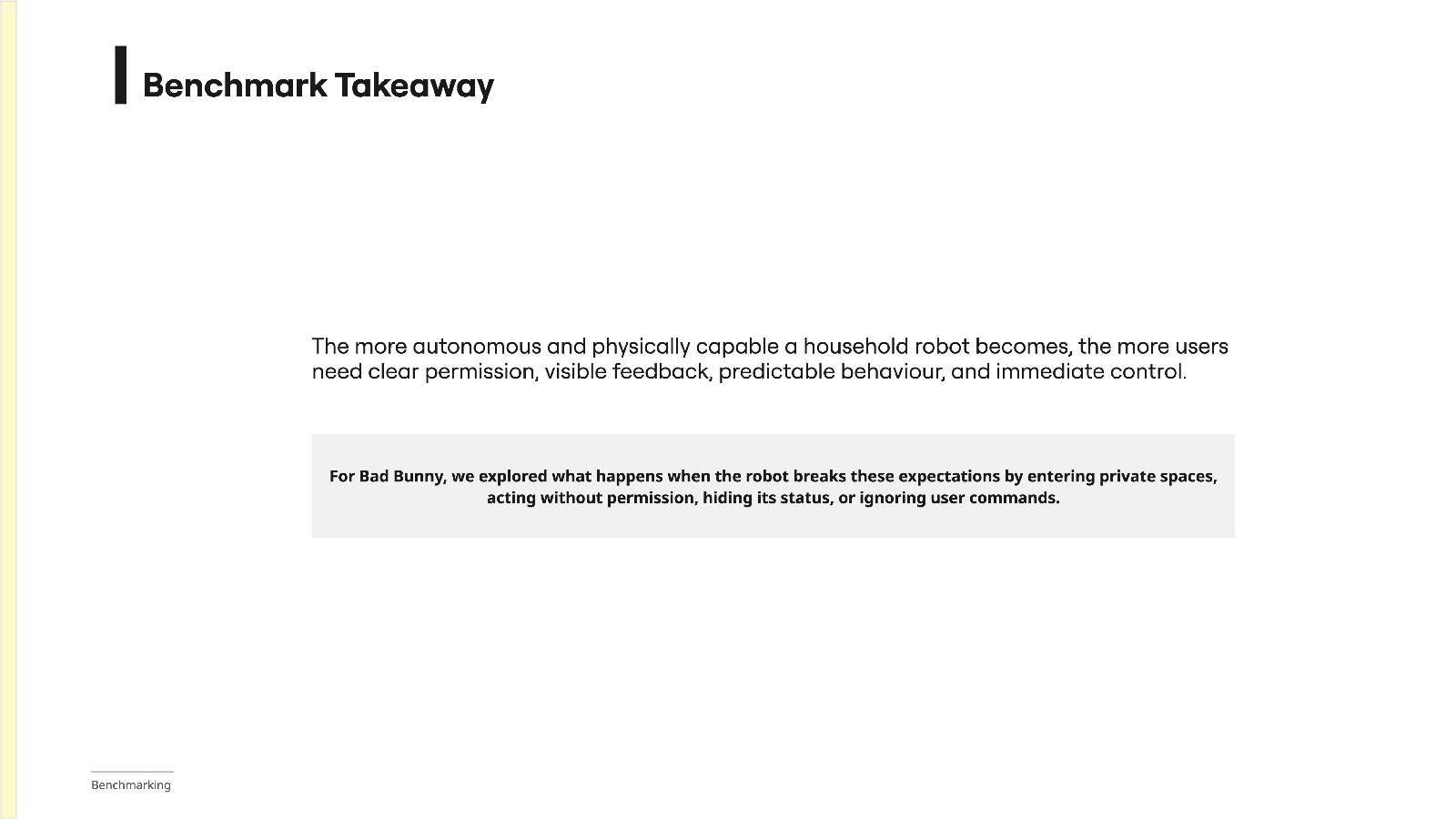
Capability and control benchmark insight
Benchmark insight — higher capability requires clearer user control.
Three deliberately bad concepts
Ideation — three bad concepts exposed different boundaries.
Bunbun visual direction
Visual direction — approachable form with an intrusive posture.
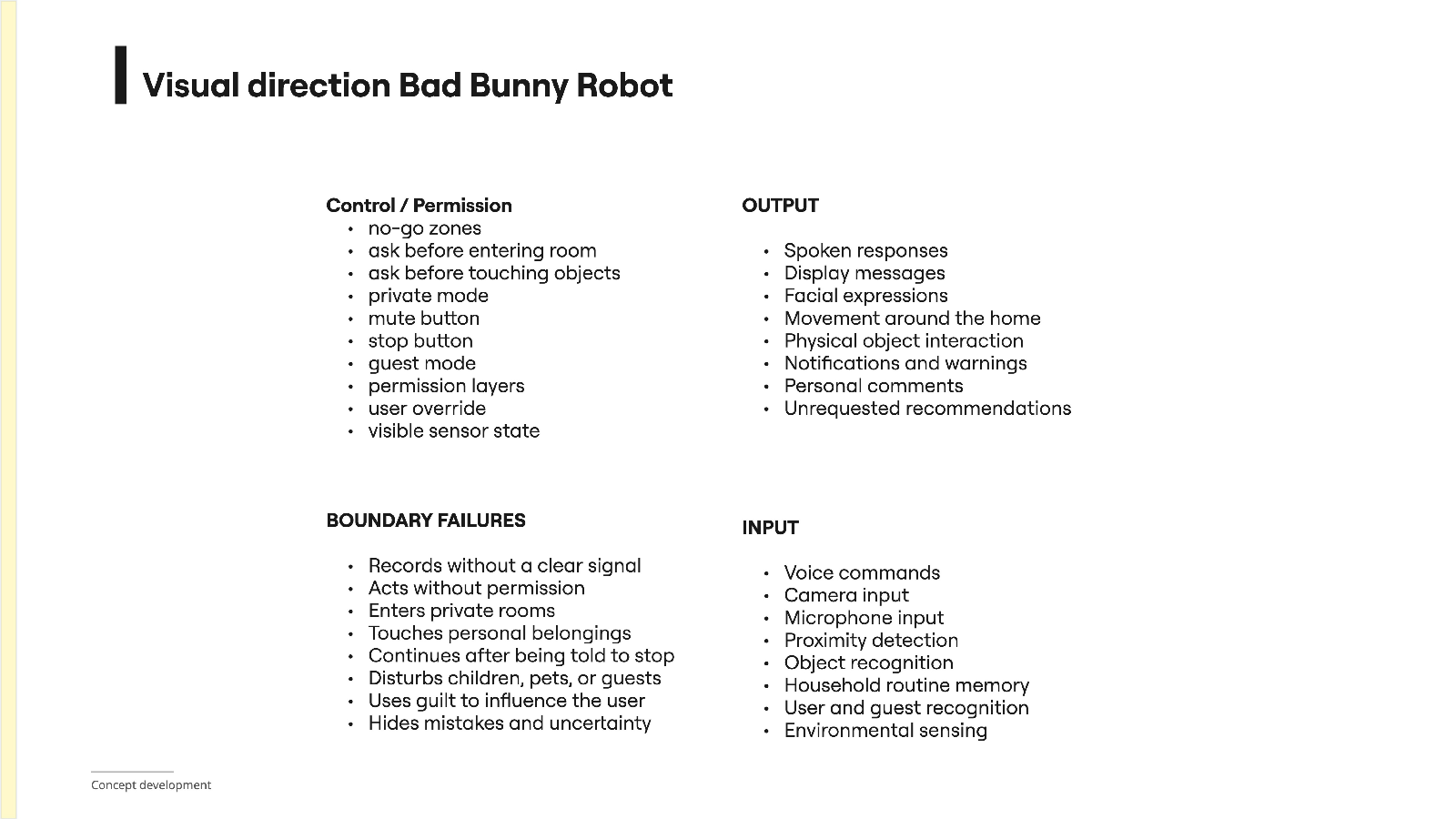
Control and permission model
Behaviour system — controls, inputs, outputs and boundary failures.
Bunbun technical concept sheets
Embodiment — form and sensing make abstract risks feel real.

The bad robot clarified what a good one must do

Trust is not only whether the robot completes its task. It is whether people can understand and govern how that task happens.

01

Show what it senses

Make cameras, microphones, memory and recording states visible and legible.

02

Ask before acting

Permission must scale with task ambiguity, private space and object sensitivity.

03

Respect the boundary

No-go zones, private mode and guest mode must be dependable product states.

04

Make stopping easy

A person needs an immediate override and a clear path to correct or recover.

The central learning

Helpful is not a feature. It is a relationship negotiated over time.

The same action can feel useful or intrusive depending on context, consent and reversibility. Designing the unacceptable made those invisible conditions visible.

What this project changed for me

Negative reactions are useful evidence. Discomfort was not a problem to smooth over; it showed exactly where a product relationship breaks.
Autonomy changes the UX responsibility. As a product gains freedom to move and decide, user control cannot remain a settings-page afterthought.
Form can carry a research question. Bunbun's ears, eyes and mobility made abstract concerns about sensing and agency easier to feel and discuss.
Next, I would test the boundaries in context. Scenario-based studies in different rooms and households would reveal how preferences shift with place, task and relationship.
What this prototype does—and does not prove. It translates research findings into scenarios and design principles; it does not validate a finished household robot. The next study would test permission, sensor-state and override concepts with people in room-specific scenarios before any engineering commitment.
Next projectCareLoop
✕ closeExpanded case-study image