A calm decision layer for getting home
If late-night travel choices are reduced and safety support stays visible, users may feel more capable of starting and completing the journey.
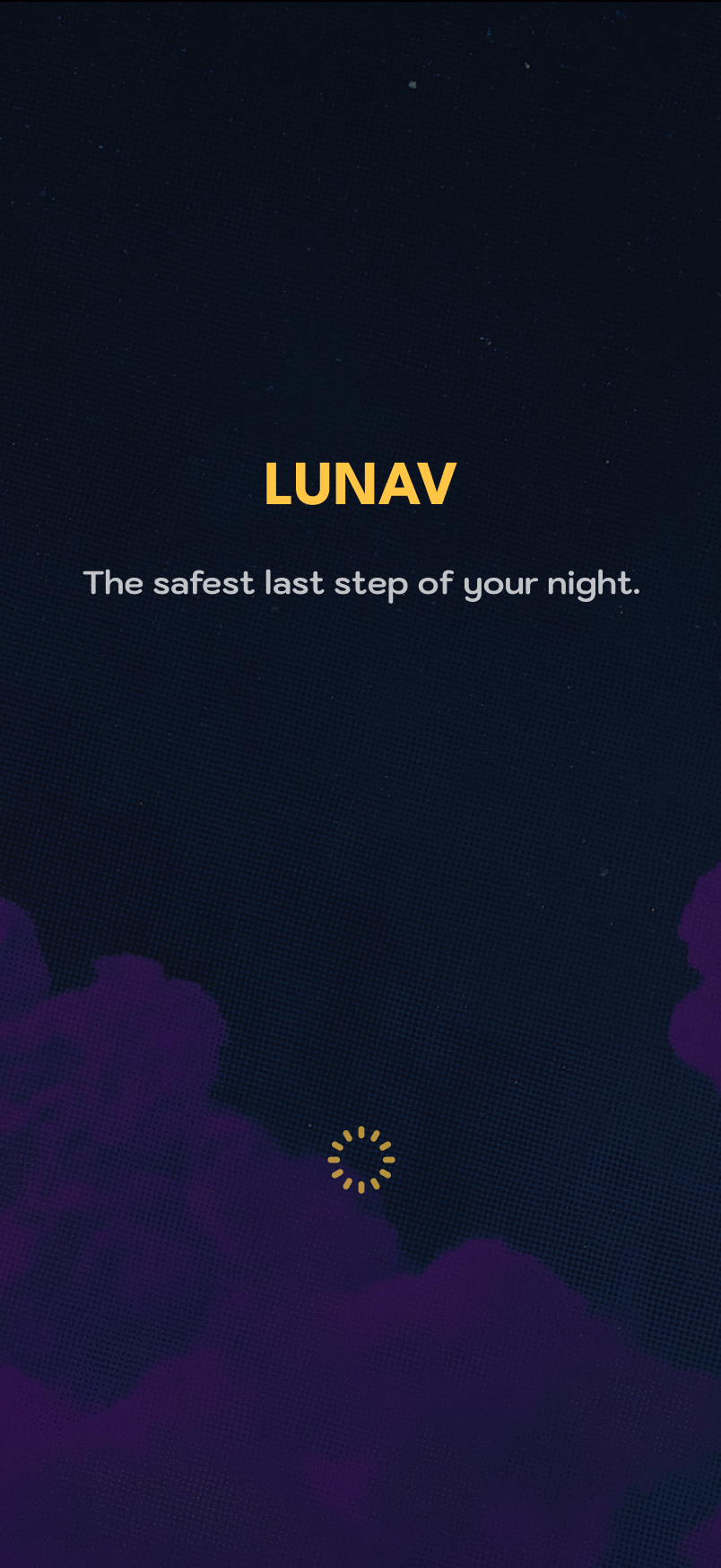
The safest last step of your night.
A late-night navigation app that helps people get home safely by offering calm, supportive choices when decision-making may be difficult.
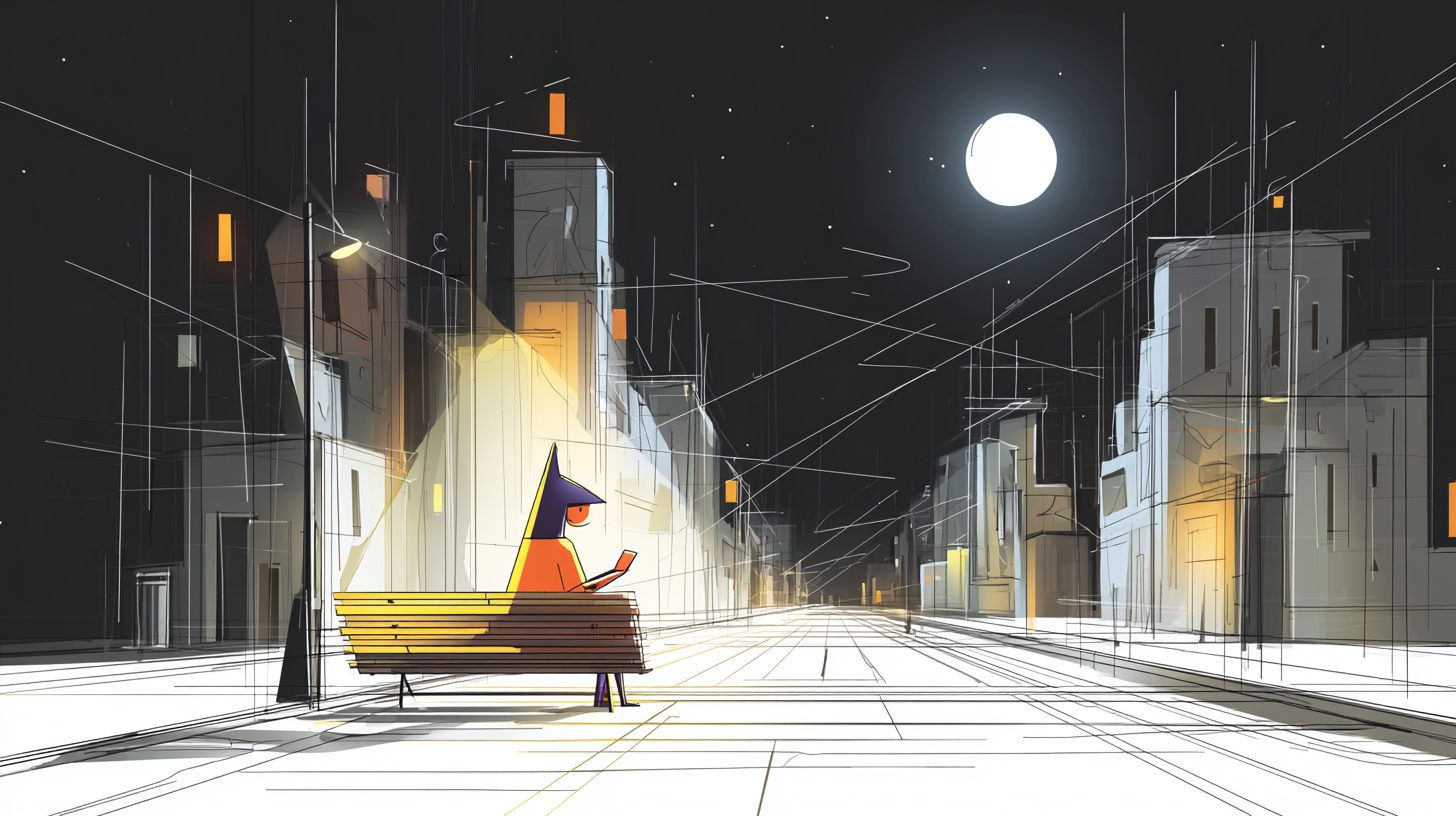
Lunav reads the night, including traffic, lighting and safety, to guide you home with calm, clear choices.
Getting home late at night can turn a familiar journey into a stressful sequence of decisions, especially when someone is tired, disoriented, or slightly impaired.
Lunav explores how a navigation product could reduce that cognitive load. Instead of judging the user, the interface offers a small set of clear options, keeps safety actions close, and communicates with the calm tone of a trusted friend.
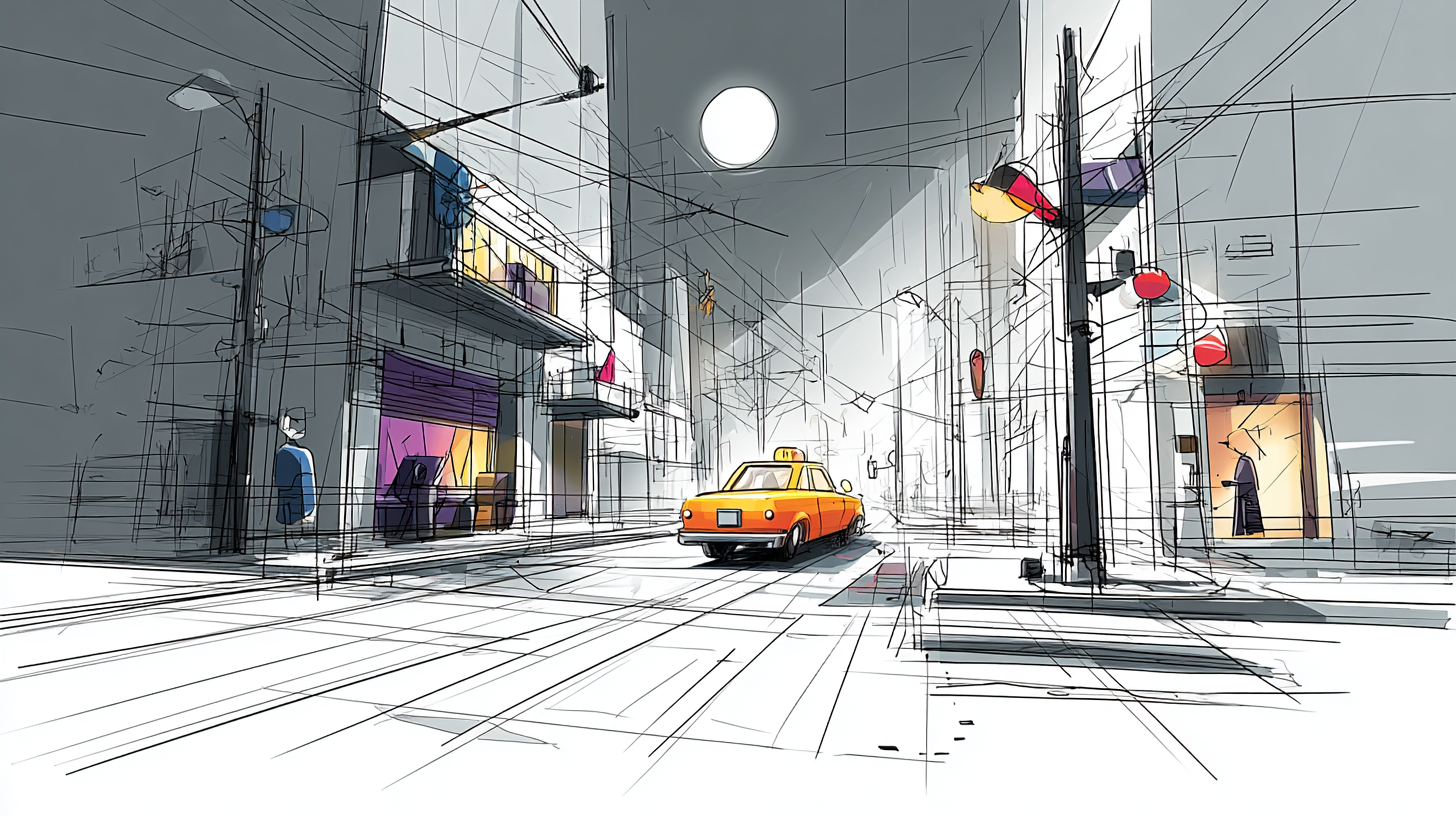
The experience prioritizes clarity over complexity: one primary action, three understandable ways home, and visible support throughout the trip.
How might we help someone choose and complete a safer journey home when their attention and decision-making may be reduced?
This project starts at product level, not with a feature inside an existing app. The first design task was to establish the proposition, the essential user need, and the smallest complete experience that could deliver value.
If late-night travel choices are reduced and safety support stays visible, users may feel more capable of starting and completing the journey.
The experience must combine practical guidance with a supportive tone, especially when confidence or attention is low.
The first product journey focuses on route selection, a live trip, emergency support, sharing, and a simple record of completed journeys.
Explore the flow as a working prototype: tap the screen, choose a stage, use the arrows, or swipe on mobile.
The dark, low-glare interface establishes a quiet visual tone before the journey begins.
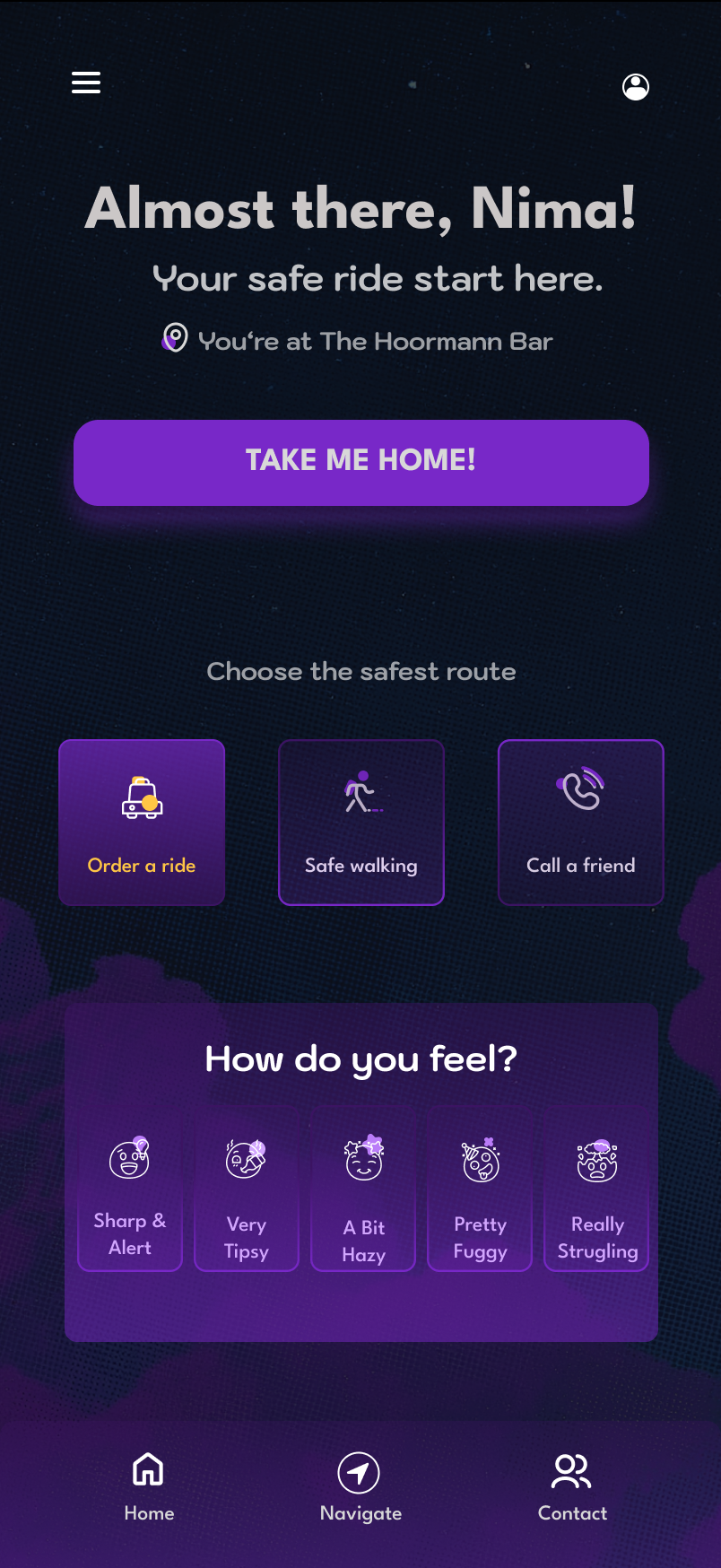
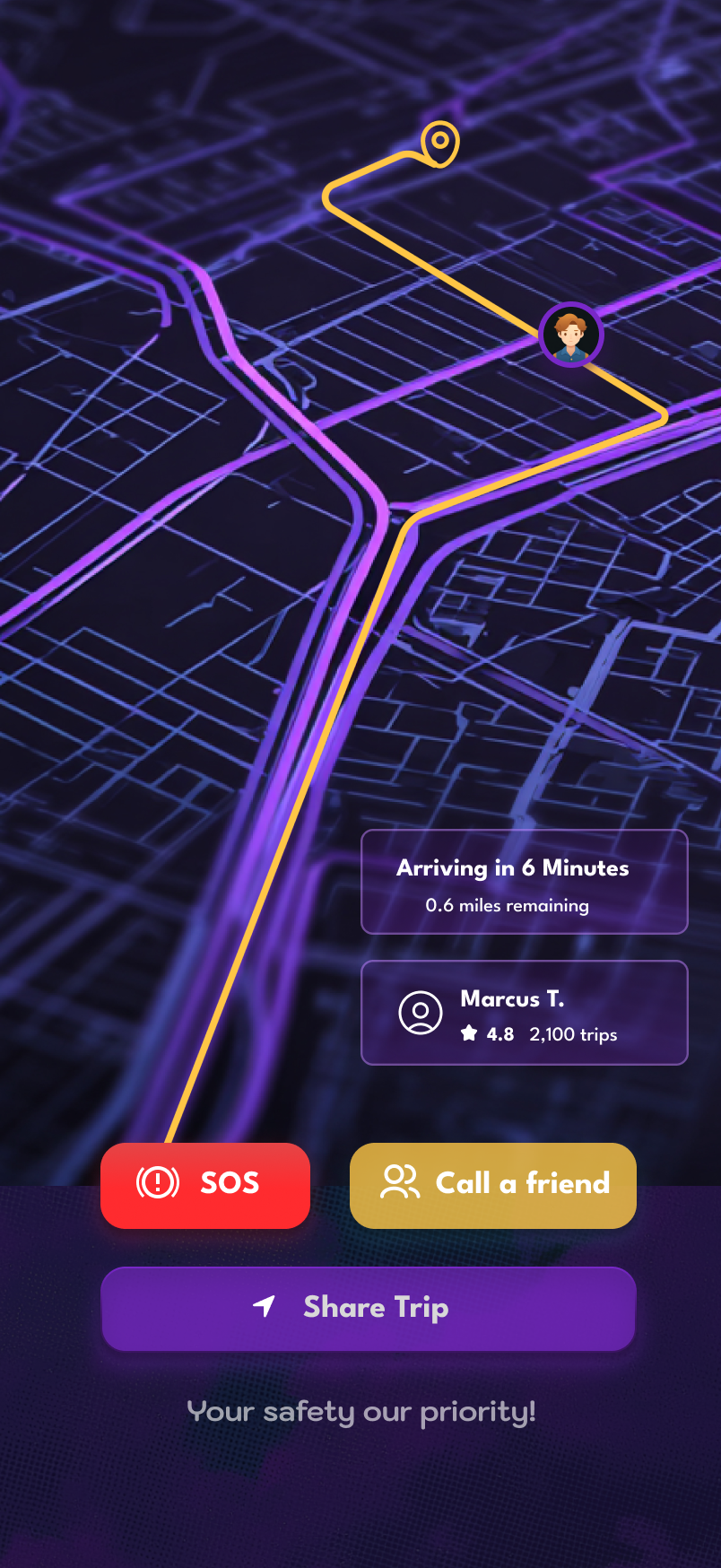
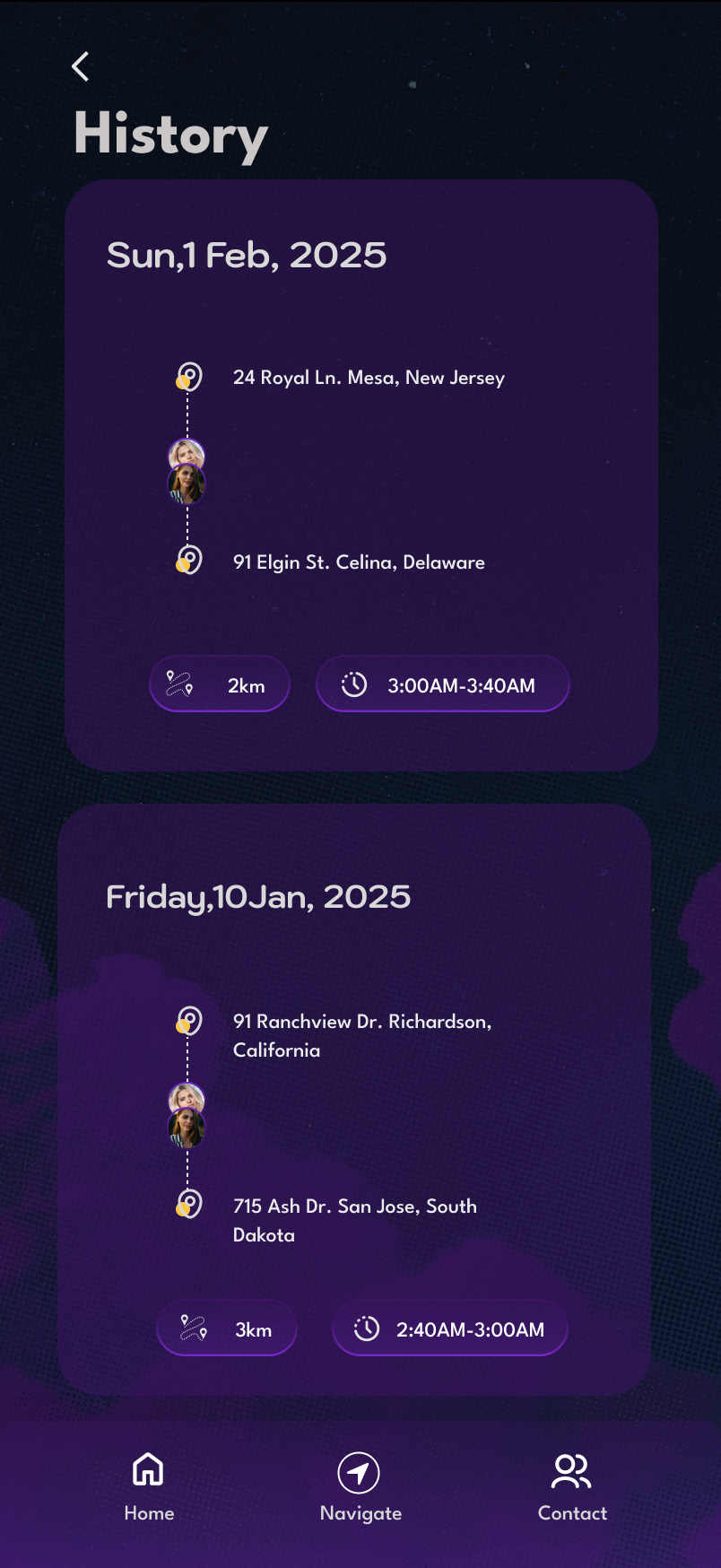
The night palette, high-visibility route line, and direct emergency actions make the experience legible while keeping the interface reassuring.
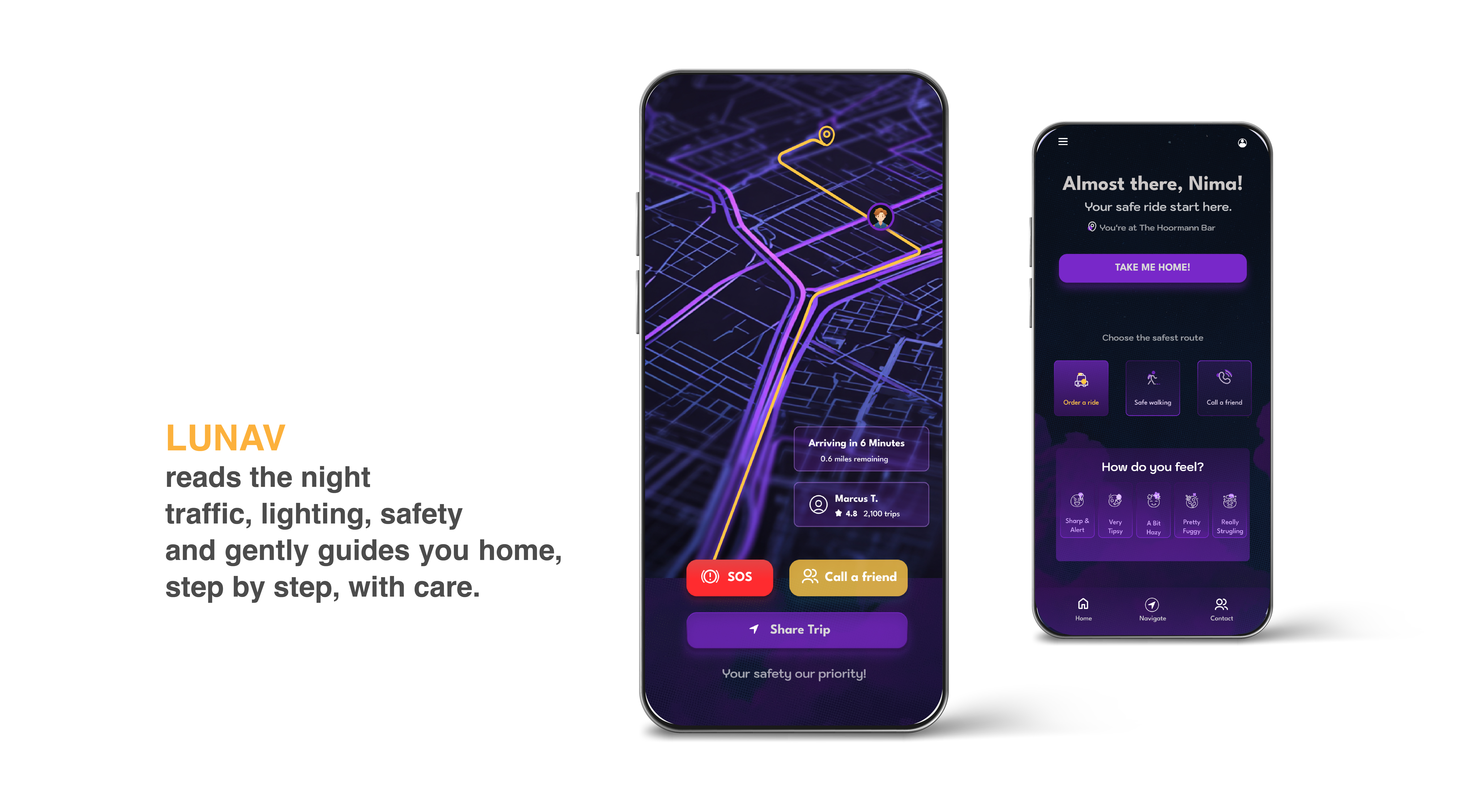
“Take me home” is visually dominant and the three route choices stay deliberately limited.
The wellbeing check and supportive language make the experience feel protective rather than corrective.
SOS, calling a friend, and trip sharing remain visible during navigation instead of hiding in a menu.
As a new-product concept, the next step is testing comprehension, low-light readability, and discovery of the safety controls.